REVIEW · AUSTIN
Austin and Hill Country Panoramic Sightseeing Tour
Book on Viator →Operated by AO Tours Austin · Bookable on Viator
Austin comes at you fast, then slow. This guided Austin and Hill Country Panoramic bus tour strings together the city’s big landmarks and scenic river-and-hills views with bilingual headsets. I love the English and Spanish earbuds-style narration built into the roomy Mercedes sprinter setup, and I also love how the route mixes classic Austin icons with “wait, that’s Austin?” viewpoints. One catch: not every seat gets the same level of panoramic sightlines, so where you sit can change what you see.
You’ll ride in comfort for about 2 hours 30 minutes, starting at 103 E 5th St at the Austin Visitors Center, and ending back there. Expect an open-air feel with air-conditioned comfort, a mobile ticket, and a small group size capped at 14 people—nice when you’re trying to hear the guide and actually take photos.
In This Review
- Key highlights to look forward to
- What you’re really buying: a fast Austin orientation plus Hill Country views
- Your ride matters: roomy Mercedes sprinter, open-air feel, and headset audio
- Meeting at 103 E 5th St and the pacing of a 2.5-hour route
- Zilker Park and Barton Springs: Austin’s backyard in one stop
- Lady Bird Lake essentials: bats, skyline views, and walkable downtown anchors
- Congress Avenue Bridge: the bat bridge moment
- 2nd Street District: music venues and local streets
- Auditorium Shores: Stevie Ray Vaughan and skyline photos
- Mount Bonnell and Lake Austin: the hilltop reset
- Culture stops you can actually recognize: Long Center, Umlauf, and Laguna Gloria
- Bridges and the Loop 360 drive: Pennybacker’s scenic reason to stop
- Greenbelt and Wild Basin: nature trails without the DIY work
- Historic Austin neighborhoods: East Sixth Street and Mayfield Park
- East Sixth Street Historic District
- Mayfield Park and Preserve
- Austin Public Library rooftop garden and the Driskill’s old-school luxury
- Austin Central Library
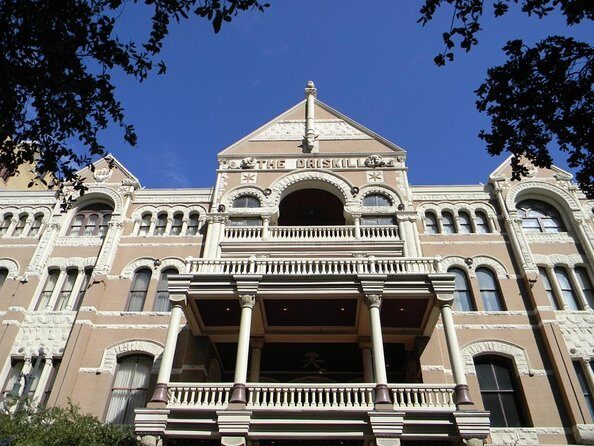
- The Driskill Hotel
- Budget and value: why $73 can work (and when it won’t)
- Who this tour is best for (and who might want a different plan)
- Should you book this Austin and Hill Country Panoramic Sightseeing Tour?
- FAQ
- How long is the Austin and Hill Country Panoramic Sightseeing Tour?
- What languages are available during the tour?
- Where does the tour start and end?
- Is food included in the price?
- How many people are on the tour?
- Do all seats have panoramic views?
Key highlights to look forward to
- Bilingual headsets (English and Spanish) so you can focus on the sights without reading a screen
- Photo-stop timing at major anchors like the Driskill Hotel, Barton Springs, and the Austin Public Library
- Lady Bird Lake classics including the Congress Avenue bat bridge and riverside viewpoints
- Hill Country hits such as Mount Bonnell, Loop 360’s Pennybacker Bridge, and Wild Basin trails
- A small-group ride with a maximum of 14 travelers for a calmer pace and better listening
What you’re really buying: a fast Austin orientation plus Hill Country views

For the money, this tour is a practical way to get your bearings in Austin without juggling rides, parking, and route planning. You’re not just seeing downtown from one angle—you’re getting a sequence of neighborhoods, parks, and scenic lookouts that show how Austin shifts from city core to water and hills pretty quickly.
The route is designed for first-timers and for anyone who’s short on time but still wants real variety: parks, theatre venues, historic buildings, bridges, and outdoor spaces. And because it’s a guided bus tour, you get context while you’re there—what you’re looking at, why it matters, and what to notice when you take photos.
Your timeframe is short enough that you won’t get bored, but long enough that the stops feel intentional rather than rushed. Just keep in mind the schedule can change or swap locations, so treat it like a guided highlights circuit.
Other Hill Country BBQ and wine tours from Austin

Your ride matters: roomy Mercedes sprinter, open-air feel, and headset audio
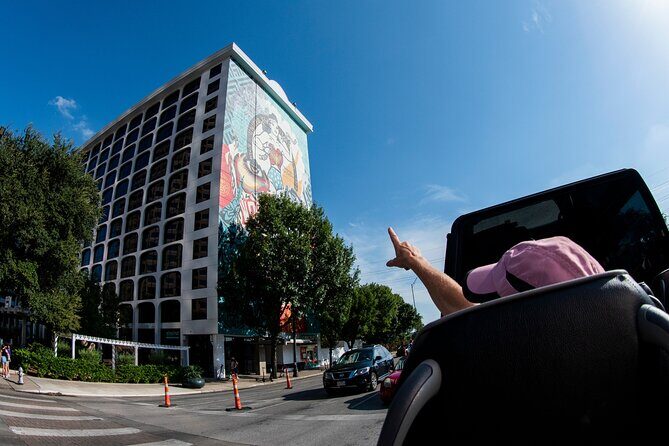
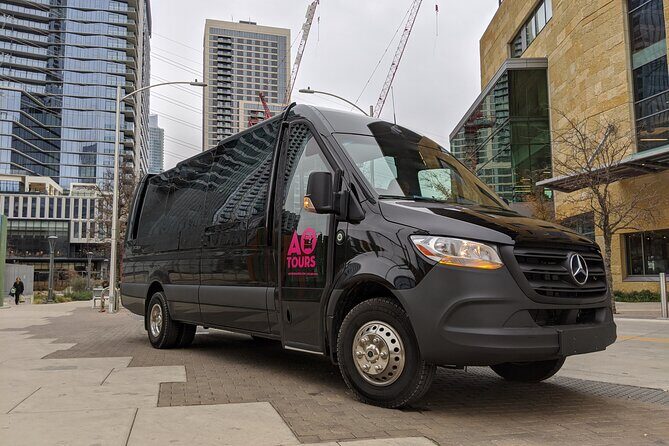
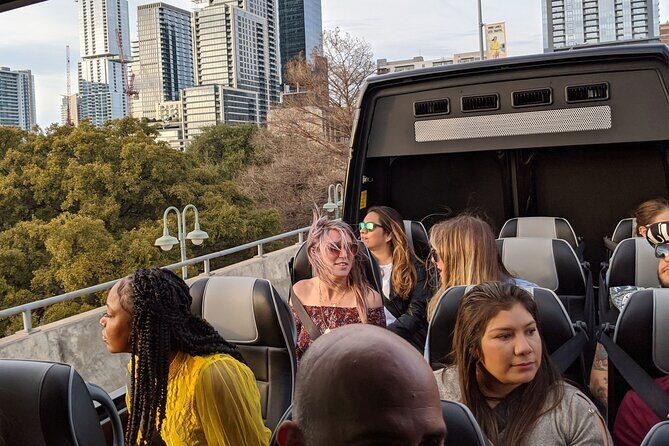
This is the kind of tour where the transportation is part of the experience. You’ll be in a luxury air-conditioned Mercedes-Benz sprinter, and the setup is described as open-air—so you’ll get those fresh-air moments while still staying comfortable.
The headsets are a big deal. They’re built for English and Spanish, which means you can follow the story even when the traffic or road turns make conversation tough. You can also use your own earbuds, which helps if you’ve got something you trust.
One more practical thing: since some seats may offer more limited panoramic views than others, if panoramic sightlines are your top priority, I’d aim for the best-positioned seats available when you board. Front seats can be less view-heavy, so you’ll want to ask where the driver suggests sitting for the best sight angles.
Meeting at 103 E 5th St and the pacing of a 2.5-hour route
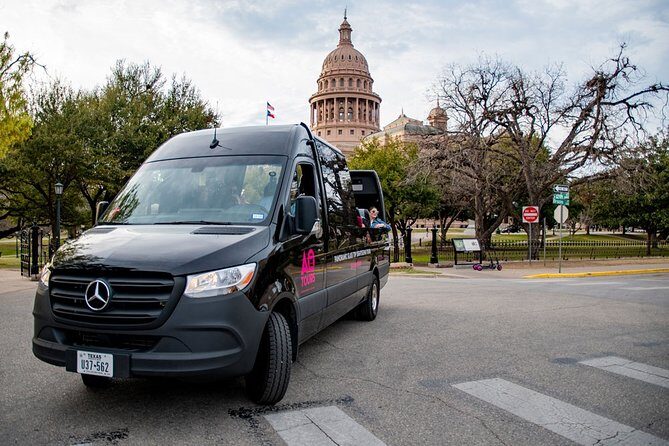
The tour starts right in town at 103 E 5th St, Austin, TX 78701, and it ends back at the same meeting point. That’s helpful if you’re staying near downtown, because you don’t have to plan a second transport step afterward.
Timing-wise, the tour is built around short photo-and-look stops. Some are listed as quick breaks—like 5 minutes at Barton Springs Dry Goods and 15 minutes at key highlights like Mount Bonnell, the Austin Central Library, and the Driskill. Not every stop has a stated minute count, but the overall rhythm is consistent: you arrive, you look, you take photos, and you move on.
That pace is why this works so well for a first day. You’ll see a lot of territory, then you can return later to the places you actually want to spend real time in.
Zilker Park and Barton Springs: Austin’s backyard in one stop
The tour begins with Zilker Metropolitan Park, a huge 351-acre slice of Austin life. It’s one of those parks that feels like it’s always hosting something—families, recreation, events. The size alone gives you a clue why Zilker is a cornerstone of the Austin identity: it’s not a tiny scenic stop, it’s built for everyday use.
From there, you’ll get to Barton Springs Pool area via Barton Springs Dry Goods. The pool is three acres and is fed by underground springs with an average temperature around 68–70 degrees, which is a big reason people swim year-round. The average temp also makes it feel less like a hot-weather gimmick and more like a genuine local rhythm.
How to use this stop: treat it like a chance to understand the vibe and location. Even if you don’t go in the water, you’ll be able to picture where it fits into Austin’s park-and-natural-springs story. And since it’s a short stop, photo and orientation first.
Lady Bird Lake essentials: bats, skyline views, and walkable downtown anchors

If Austin has a front porch, it’s Lady Bird Lake. The tour hits multiple stops around it so you see the lake from different angles.
Other driving and sightseeing tours in Austin



Congress Avenue Bridge: the bat bridge moment
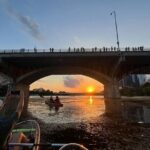
At the Ann W. Richards Congress Avenue Bridge, you’re going to run into one of Austin’s most famous natural spectacles: the world’s largest urban bat colony. These are Mexican free-tailed bats that roost beneath the road deck. The numbers are wild—between 750,000 and 1.5 million bats under the bridge each summer, according to Bat Conservation International.
Important note for planning: the tour description frames this as a stop to see the location and learn about it, rather than guaranteeing a specific bat-sighting window. So go in curious for the story and the setting, not assuming every moment includes a burst of bats in the air.
2nd Street District: music venues and local streets
Next up is 2nd Street District, a downtown pocket known for local retail, restaurants, and entertainment. This stop connects you to several Austin identifiers at once: the Willie Nelson Statue, the Moody Theater (where Austin City Limits is recorded), City Hall, and the walkable closeness to Lady Bird Lake.
If you’re trying to decide where to return later for dinner or music, this is the kind of stop that gives you a short list.
Auditorium Shores: Stevie Ray Vaughan and skyline photos
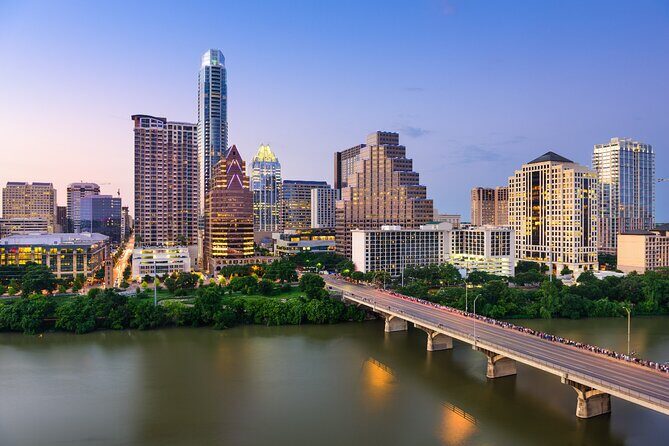
Auditorium Shores sits along the south shore of Lady Bird Lake. It’s near the Long Center and Palmer Events Center, and it also sits by the Town Lake Hike and Bike Trail. A memorial statue of Stevie Ray Vaughan anchors the area, and the park is known for downtown skyline views.
This is one of the stops where you’ll want to take a breath and just look. You get a sense of how Austin’s skyline grows around the water.
Mount Bonnell and Lake Austin: the hilltop reset

Next is Mount Bonnell (also known as Covert Park), a longtime viewpoint on the Lake Austin side of the Colorado River. It’s been a tourist destination since the 1850s, and that history matters because the viewpoint hasn’t lost its appeal—why? Because it’s still a clear, elevated look at Austin’s city core, Lake Austin, and the surrounding hills.
You’re likely to spend about 15 minutes here, so keep it simple: photos early, then a slower look. This is the stop that helps the day feel more like a mini road trip than a stop-and-go checklist.
Culture stops you can actually recognize: Long Center, Umlauf, and Laguna Gloria

Austin isn’t only live music and barbecue smoke. It also has serious cultural spaces, and this tour threads a few of them together so you can see the range.
You’ll pass by the Joe R. and Teresa Lozano Long Center for the Performing Arts along Lady Bird Lake. The tour description frames it as a venue for productions for audiences of all ages, including musicals and theatre for families. Even if you’re not catching a show that day, it’s a strong location marker for where the performing arts pulse lives downtown.
The route also includes The UMLAUF Sculpture Garden & Museum, home to the largest collection of American sculptor Charles Umlauf. This stop is especially helpful if you tend to gravitate toward art spaces but don’t know where to start. You’ll see the garden-and-museum setting without needing to plan a separate detour.
Then there’s Laguna Gloria Art Museum, described as a Mediterranean-style villa built in 1916 for Henry H. and Clara Driscoll Sevier. The property was named Laguna Gloria for a nearby lagoon off the Colorado River, and later, in 1943, it was conveyed to the Texas Fine Arts Association. If you like places where architecture and art share the same air, this is the stop that gives you that.
Bridges and the Loop 360 drive: Pennybacker’s scenic reason to stop
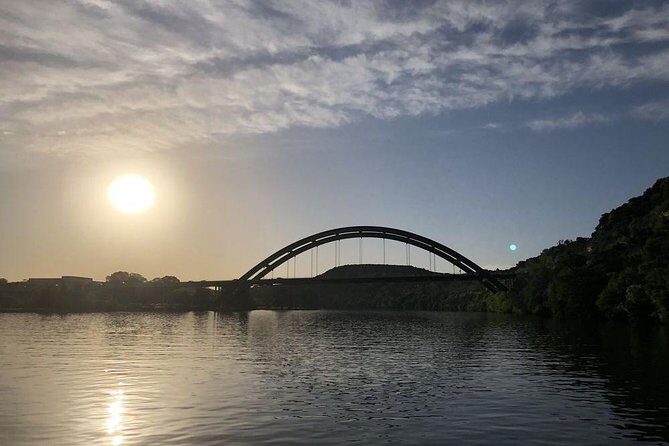
A key scenic driver moment on this tour is the Percy V. Pennybacker Jr. Bridge, which crosses Lake Austin and connects sections of Loop 360. It’s widely considered one of Texas’s most scenic urban drives, and that’s largely due to the bridge’s arched weathering-steel design with rolling hills flanking the road.
This is one of those stops where the point isn’t a museum ticket—it’s the visual payoff. If you’ve never done the “watch Austin turn into terrain” thing, this bridge angle helps you understand why locals brag about their drives.
Greenbelt and Wild Basin: nature trails without the DIY work
The tour transitions into outdoor Austin with Wild Basin Wilderness Preserve and the Barton Creek Greenbelt.
At Wild Basin, you’ll be told it’s 227 acres of native Texas Hill Country habitat in Westlake Hills, with 2.5 miles of hiking trails. That’s enough trail space to understand the feel of the preserve without pretending you’ve done a full hike day.
Then you’ll hear about Barton Creek Greenbelt, a go-to spot for people who hike, bike, rock-climb, and even swim. The tour description points out that you can also spend a laid-back day on boulders or in a hammock along Barton Creek. It also notes 12 miles of trails via several access points throughout Austin.
Practical takeaway: this isn’t a substitute for doing your own longer hike. But it is a smart way to see where you’d go next if you want to plan an active half-day. If you’re visiting without a car, these are the kinds of “anchor areas” that make future planning much easier.
Historic Austin neighborhoods: East Sixth Street and Mayfield Park
To understand Austin, you need both the famous and the lived-in.
East Sixth Street Historic District
You’ll also spend time oriented around East Sixth Street, in a nine-block area roughly between Lavaca Street and Interstate 35. This area is recognized as the Sixth Street Historic District and was listed on the National Register of Historic Places. The tour description highlights two- or three-story masonry Victorian commercial architecture, with many buildings built by the 1880s. It also mentions a few notable exceptions, including the Driskill Hotel.
This stop matters because it shows you where the city’s commerce-and-culture streaks meet. If you’re forming a game plan for music nights or food, you’ll remember this corridor.
Mayfield Park and Preserve
Then there’s Mayfield Park and Preserve, described as an island of restful respite in the middle of Austin. It’s listed in the National Register of Historic Places, and the tour notes the whole estate was presented to the city in 1971 by Mary Mayfield Gutsch for everyone to enjoy as a park.
This is a good counterbalance stop. After bridges and viewpoints, Mayfield gives you a sense of calm and a reminder that Austin likes to keep nature inside the city.
Austin Public Library rooftop garden and the Driskill’s old-school luxury
Two of the best “photo with purpose” stops are in the downtown core.
Austin Central Library
At the Austin Central Library, the tour points out the design work by Lake Flato Architects and Shepley Bulfinch (successor to the firm founded by Henry Hobson Richardson). It’s not just a building stop: the description notes a living rooftop garden, reading porches, an indoor reading room, and a bicycle corral. There are also event spaces, an art gallery, and a café run by the ELM Restaurant Group.
If you’ve only seen Austin as a music-and-food stop, this is where you see its modern public-spaces pride. It’s also an easy place to take photos without rushing through a museum layout.
The Driskill Hotel
Then you’ll see The Driskill, built in 1886 as the showplace of a cattle baron. The tour describes the opulent lobby details: marble floors, a stained-glass dome, corridors filled with museum-quality artwork, and a grand mezzanine for a glimpse into the hotel’s storied past.
This is one of those stops where the vibe is part of the story. It’s not only history on a plaque; it’s history in a room.
Budget and value: why $73 can work (and when it won’t)
At $73 per person for about 2 hours 30 minutes, this is priced like a guided “hit list” tour—not a full-day excursion, and not a free-for-all hop-on hop-off pass. The value comes from what you get bundled:
- transport in a luxury air-conditioned Mercedes sprinter
- a guided route covering a long list of iconic sites
- headsets (and you can use your own)
- a Signature PinkTag partner souvenir luggage tag
- GST included
You’re not paying extra for basic guidance or for all the driving logistics. And for a first visit—especially if you’re staying downtown—this can be cheaper than piecing together multiple rides, assuming you’d otherwise spend time planning and getting to separate locations.
Two things to keep in mind:
- Food and beverages aren’t included, though you can bring your own. If you hate decision fatigue on vacation, pack a snack.
- Parking fees aren’t included. The good news is the tour handles the driving and stopping; the less-good news is if you’re comparing this to DIY, you should remember Austin parking can be a time tax.
If you’re the type who wants to wander at leisure and take long visits inside sites, you might find the stops too short. This tour is built for seeing a lot and learning the lay of the land fast.
Who this tour is best for (and who might want a different plan)
This tour fits you if:
- you’re visiting Austin for the first time and want a quick orientation
- you want a guided story while you’re moving between parks and neighborhoods
- you’d rather sit back in comfort than manage driving and parking
It might not fit you as well if:
- you’re picky about panoramic sightlines and don’t want any seat variability
- you prefer long museum-style time at indoor stops rather than short photo-and-look breaks
- you want a hike that turns into an actual full workout day
Also, if you care about narration quality, the guide factor matters. Names that have come up include Doug, Chad, and Jaye—described as funny, friendly, and knowledgeable, with extra info beyond the standard script.
Should you book this Austin and Hill Country Panoramic Sightseeing Tour?
I’d book it if you want the easiest way to see Austin’s range in one afternoon. The combination of Lady Bird Lake landmarks (including Congress Avenue bats and Auditorium Shores), classic downtown anchors (2nd Street District, Austin Central Library, The Driskill), and quick “hill views” (like Mount Bonnell and the Pennybacker Bridge area) is exactly how you get your bearings fast.
Before you book, be honest about two things. First, the panoramic experience can vary by seat, so choose your position when you board. Second, it’s a short-stop format, so bring snacks and expect lots of photos, not long sittings.
If the weather’s good, and you want a guided overview that saves you planning time, this tour is a solid value at $73—especially on a first day when you’re still figuring out your Austin “neighborhood home base.”
FAQ
How long is the Austin and Hill Country Panoramic Sightseeing Tour?
It’s approximately 2 hours 30 minutes.
What languages are available during the tour?
The vehicle is equipped with headsets offering both English and Spanish.
Where does the tour start and end?
It starts at 103 E 5th St, Austin, TX 78701, and ends back at the same meeting point.
Is food included in the price?
No. Food and beverage aren’t included, but you can bring your own.
How many people are on the tour?
The tour has a maximum of 14 travelers.
Do all seats have panoramic views?
Not necessarily. Different seating options can affect the view, and some seats (including front seats) may have more limited sightlines than others.