REVIEW · AUSTIN
Austin and Hill Country Sightseeing Tour
Book on Viator →Operated by AO Tours Austin · Bookable on Viator
Austin in 90 minutes starts with a cool van. This air-conditioned Mercedes-Benz sprinter tour stacks in 50+ points of interest, from the Texas Capitol to Congress Avenue bats, with narration and lots of local context as you crisscross town and push into the Hill Country side.
What I like most is the comfortable ride plus the human touch of a real local guide telling you why places matter. You’ll get quick-hit pointers for what to eat, where Austin shows up loudest, and what to circle later on your own.
The main tradeoff: many stops are drive-by views, and the pace is brisk. If you want long photo sessions or to linger at museums, plan to do the detailed exploring after the tour.
In This Review
- Key things to know before you ride
- The sprinter-van advantage on Austin streets and Hill Country roads
- Price and value: why $33 can make sense for a first day
- The pace reality: 90 minutes, lots of drive-bys, and photo limits
- AO Tours Austin meet-up and your warm start in Downtown
- 2nd Street District to City Hall: the Downtown framework
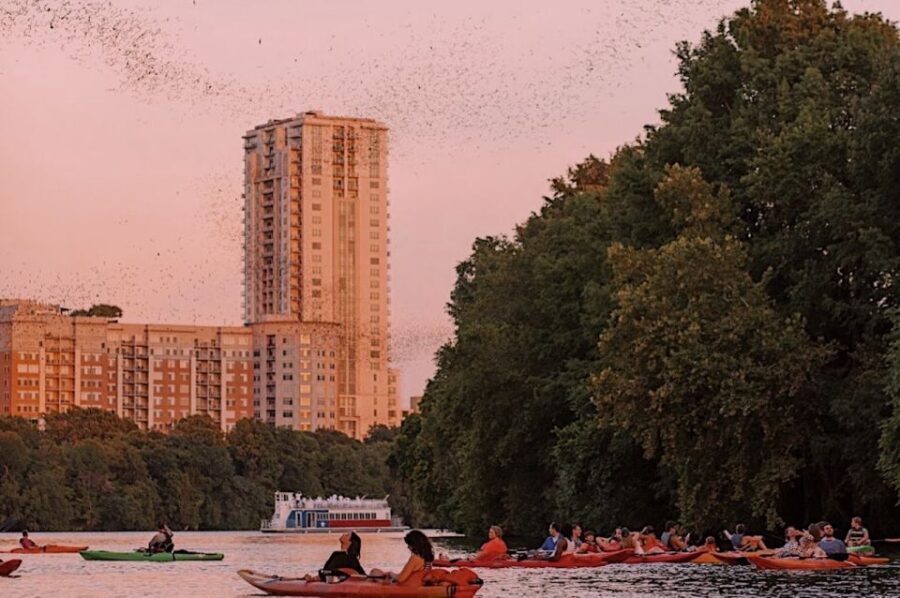
- Congress Avenue and the bat skyline: one of Austin’s must-know stops
- Lady Bird Lake loop: parks, dogs, power views, and cool-down energy
- Umlauf Sculpture Garden, Wild Basin trails, and the quiet side of Hill Country
- Pennybacker Bridge to Lake Austin: scenic drives that frame the city
- Peacocks, historic communities, and the in-between parts of Austin
- UT, the Capitol, LBJ: big institutions and where they sit
- Warehouse District and Downtown “hang zones”: where Austin’s daily life lives
- Using the tour afterward: how to turn a 90-minute drive into real plans
- Should you book this Austin and Hill Country tour?
- FAQ
- How long is the Austin and Hill Country tour?
- What does it cost?
- How far does the tour cover?
- Where is the meeting point?
- Are food and drinks included?
- Is there downtown hotel pickup?
- Is smoking allowed?
- Can I cancel for a full refund?
- Are service animals allowed?
Key things to know before you ride

- Small group size (up to 14) makes it easier to hear the guide and feel less herded.
- 50+ sights in about 90 minutes is great for a first-day orientation, not slow sightseeing.
- Air-conditioned Mercedes-Benz sprinter means you can focus on the sights, not the heat.
- Live guide stories blended with scripted narration keeps the content moving, even when you’re just passing by.
- Congress Avenue Bridge bat season can turn the stop into a memorable skyline moment (March to September).
- Windows and traffic affect photos since you’re often seated on one side of the vehicle.
The sprinter-van advantage on Austin streets and Hill Country roads
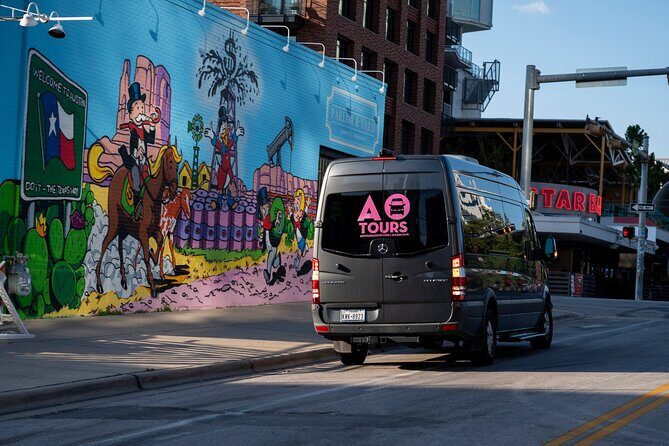
This tour is built around speed plus comfort. You start and end at 103 E 5th St., and you’ll travel in an air-conditioned Mercedes-Benz sprinter, which matters in Austin when the sun is doing the most. In about 90 minutes, you cover roughly 30 miles, hitting a lot of landmarks without you needing to drive, park, or navigate.
The ride also helps you connect the dots. Austin can feel like a pile of neighborhoods that don’t talk to each other. From the van, you get a “whole-city” angle fast, and the guide’s commentary ties the stops together so you understand what you’re looking at.
The group stays small (max 14 travelers), so you’re not stuck listening to your neighbors while you’re trying to hear about things like Austin’s music scene or the city’s performing arts venues.
Other Hill Country BBQ and wine tours from Austin



Price and value: why $33 can make sense for a first day
At $33 per person for about 1 hour 30 minutes, you’re paying for three things: transportation, narration, and an organized “greatest hits” path. You’re also not paying for entry tickets during the tour itself—your first stop includes a free admission ticket note.
You do miss out on hands-on experiences at every single stop, because most are drive-by. But that’s the point. If your goal is to get oriented, learn what’s worth your time later, and avoid spending your first day stuck in the wrong part of town, this price is easier to justify.
One included perk I like: the tour provides a PinkTag partner souvenir luggage tag. It’s small, but it’s a nice take-home without needing to shop for a “souvenir tax” every day.
The pace reality: 90 minutes, lots of drive-bys, and photo limits
You should go into this tour with the right expectations. You’re covering 50+ points of interest, which means you’re not stopping long at most places. Think of it as an Austin orientation drive with narration and occasional look-closer moments, not a walking tour where you can linger.
A common practical issue is visibility. When you’re on a moving vehicle, traffic flow and seating position matter. If you’re set on photography, expect that photos from the “wrong side” of the van can be frustrating, and you may be better off using the tour for notes and letting your phone camera do quick grabs only.
The narration is a mix of live commentary and scripted content. That can be a plus when it keeps things moving, and a downside if you prefer one steady voice the whole time. The good news is the guide component tends to bring personality and local suggestions into the mix.
AO Tours Austin meet-up and your warm start in Downtown
Your tour kicks off at AO Tours Austin, starting at 103 E 5th St. You’ll have about 20 minutes at the start area, and then the van rolls into Downtown’s key districts.
This matters because the first few minutes set the tone. Instead of jumping straight to the Texas Capitol or the bats, you begin with Austin’s downtown rhythm—walkable streets, retail and restaurants, and the kind of landmarks that help you later recognize what’s where.
The first stops include the 2nd Street District area and the Willie Nelson Statue on Willie Nelson Boulevard (formerly 2nd St.). That’s a quick way to anchor Austin’s modern identity: music isn’t a side theme here; it’s everywhere.
2nd Street District to City Hall: the Downtown framework

After the Willie Nelson stop, you’ll move through Downtown landmarks that help you understand Austin’s layout.
You’ll pass Austin City Hall, constructed in 2004—an easy-to-spot civic marker when you’re later trying to find your way around. You’ll also see where Austin City Limits is filmed. Even if you never watch the show, this is the kind of location that explains why Austin’s music scene feels different.
You’ll also be shown The Moody Theater and nearby Austin music-party energy, including 6th Street. The goal isn’t to turn this into a night-out itinerary. It’s to give you enough context that you can decide on your own later: Do you want music venues, bar streets, or a quieter evening?
From a “value per minute” standpoint, these drive-by moments are efficient. They show you where the action lives so you don’t waste time guessing.
Other driving and sightseeing tours in Austin




Congress Avenue and the bat skyline: one of Austin’s must-know stops

One of the tour’s signature moments is the Bat Bridge on Congress Avenue. This is specifically called out for the season from March to September, when people flock to watch the bats in the sky.
Even if you’re not there in that window, this stop is useful. It teaches you where Austin’s most famous nature-city link happens. If you’re planning your trip dates, this is the kind of detail that helps you prioritize.
You’ll also pass key downtown performing arts landmarks along Lady Bird Lake, including the Joe R. and Teresa Lozano Long Center for the Performing Arts. This gives you a sense of Austin’s cultural engine beyond music bars and live shows.
If you’re the type who likes to plan ahead, take note: knowing where these venues are makes it much easier to find an evening plan later without relying on a ride share every time.
Lady Bird Lake loop: parks, dogs, power views, and cool-down energy
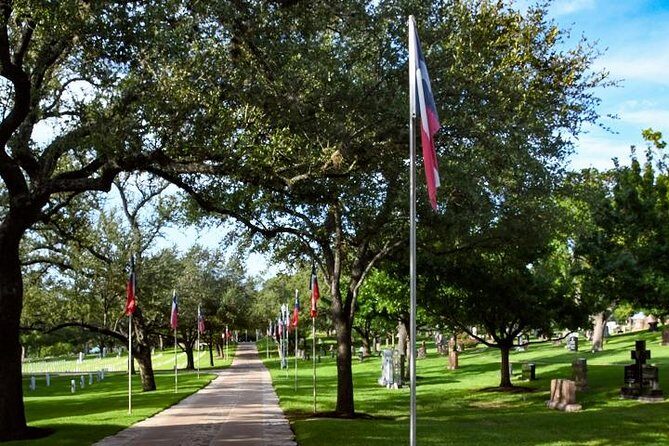
As the tour continues through central Austin, you’ll spend a lot of time near Lady Bird Lake. This is where the city breathes: parks, trails, and constant activity.
You’ll pass a dog park area along the lake and get that small but telling snapshot of local life—Austin is outdoorsy, even when you don’t notice it at first.
The route also includes Palmer Events Center, sitting next to Butler Park with views toward downtown. If you later want to understand where events happen in relation to the skyline, this is a helpful orientation.
Then you’ll be brought to Zilker Metropolitan Park, described as Austin’s most-loved park and 351 acres. The tour calls out its role as a recreation hub, which is exactly how Zilker works in real life: picnics, hang time, and a sense of public space that feels like part of the city’s identity.
Umlauf Sculpture Garden, Wild Basin trails, and the quiet side of Hill Country

Not everything is big-city noise. You’ll also get glimpses that slow things down.
The tour includes UMLAUF Sculpture Garden & Museum, home to the largest collection of Charles Umlauf’s work. Even a quick pass by a place like this helps you remember that Austin isn’t just crowds and music; it has art spaces you can actually visit deliberately later.
You’ll then pass a spring-fed creek that feeds into Lady Bird Lake and get a calmer visual pause before you head toward Hill Country habitat.
That Hill Country turn shows up at Wild Basin Wilderness Preserve, 227 acres of native Texas Hill Country habitat, with 2.5 miles of hiking trails. Again, you’re not here for a long hike on this tour. You’re learning where this kind of nature access sits near the city—useful if you want to schedule a morning walk after your tour day.
If you prefer your outdoors closer to the city center, the Lady Bird stops will feel more your speed. If you want a quick taste of native habitat, Wild Basin is your clue.
Pennybacker Bridge to Lake Austin: scenic drives that frame the city
If you want the “wow, that’s Texas” view factor, this part of the route is where it happens.
You’ll pass the Percy V. Pennybacker Jr. Bridge, described as a through-arch bridge across Lake Austin. It’s also tied to Loop 360, known as the Capital of Texas Highway, and the tour highlights it as one of the most scenic urban drives in Texas, in part because of the arched weathering-steel design and the rolling hills.
You’ll also see Lake Austin directly and then Bull Creek. These aren’t named just for decoration. They give you a mental map of where Austin’s water views sit relative to where people live and where the scenic drives go.
Mount Bonnell is another big one. You’ll pass Mount Bonnell (Covert Park), with a vista over Austin, Lake Austin, and the surrounding hills, and a note that it’s been a tourist destination since the 1850s. Even from the van, it helps you understand why people go there for viewpoints.
Peacocks, historic communities, and the in-between parts of Austin
Austin has a layer cake of eras, and this tour tries to show it.
You’ll pass Mayfield Park and Preserve, described as an estate-style island park and specifically noted for peacocks. The tour also mentions it’s on the National Register of Historic Places and that the estate was given to the city in 1971 for public enjoyment. Those details help turn a “nice park sign” into a real story you can later look up if you want.
You’ll also pass the Historic Freedmen’s Community, noted as the oldest high school west of the Mississippi. That’s one of those stops that adds weight to the overall tour, because it reminds you Austin’s story isn’t only about entertainment districts and state government.
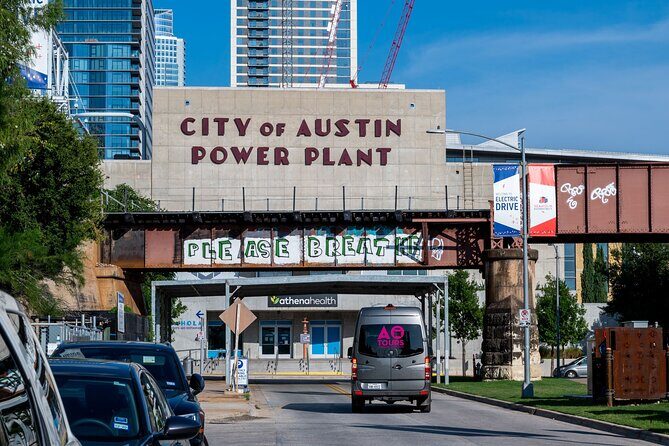
Other pass-by stops in this stretch include Seaholm Power Plant and the Austin Public Library. These help connect modern Austin infrastructure to the same downtown geography you’ll be walking later.
UT, the Capitol, LBJ: big institutions and where they sit
If you’re planning to visit campus or spend time around state government buildings, this tour gives you location intelligence.
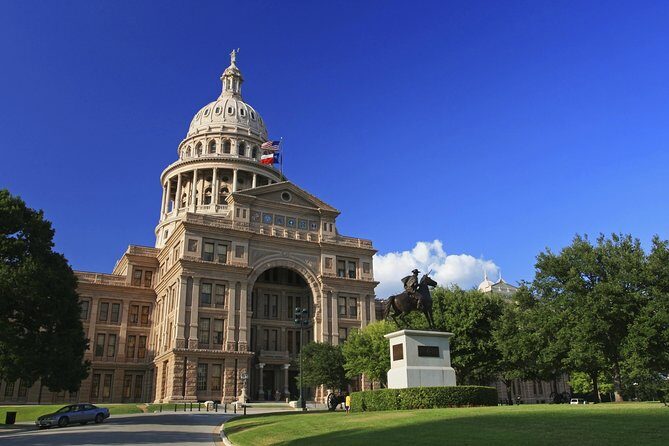
You’ll pass the Texas State Capitol, along with UT Main Campus, UT Stadium, and other nearby museums, including a natural history museum stop and several performing arts and museum sites. You’ll also see Texas National Guard Base & Museum, plus the governor’s mansion, and the LBJ Library.
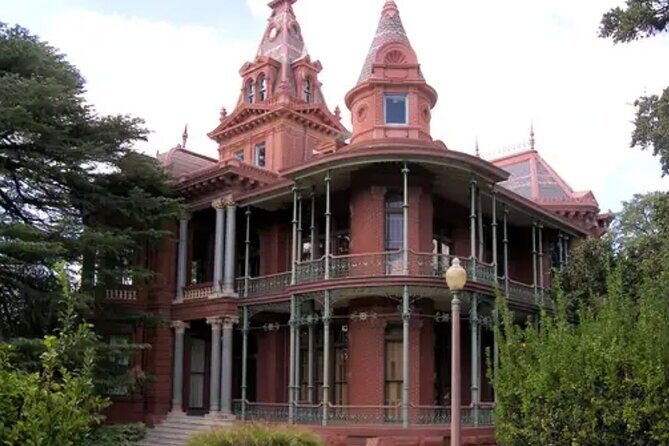
The route also includes historic towers around town, a historic hotel on Brazos St, and French Legation. Then you’ll be shown Austin’s historic hotel and cemetery areas as part of the broader pass-by sweep.
You’ll also get a stop noted for historically significant figures’ final resting place. That kind of detail matters because it points you toward places you might not think to prioritize until you understand their location.
At this stage of the tour, the value is mostly orientation. You’re not meant to tour every building today. You’re being handed a map in the form of landmarks, so later you can pick a handful of things that truly match your interests.
Warehouse District and Downtown “hang zones”: where Austin’s daily life lives
Between the big institution stops, the tour also includes smaller texture points around the downtown grid.
You’ll pass the Warehouse District and a coffee shop in the Warehouse District, plus an area labeled the Frontside. You’ll also see the downtown lake area and general downtown walking-trail corridors.
These are helpful not because they’re top-tier attractions on their own, but because they tell you how people move through the city. When you later choose where to park for dinner or where to walk after a show, this kind of context can save you time.
If you’re short on time, this tour works like a compass: it helps you decide what neighborhood energy fits you best.
Using the tour afterward: how to turn a 90-minute drive into real plans
This kind of tour is best used as a planning tool. After you get dropped back where you started, you should have a shortlist.
I like to do it like this:
- Pick one music-related area you want to revisit (something tied to venues you saw or the vibe of 6th Street).
- Choose one water-and-park day (Lady Bird Lake or Zilker).
- Decide whether you want a viewpoint morning (Mount Bonnell and nearby scenic roads).
- Add one culture stop from what you saw pass by: something tied to the Long Center, UMLAUF, or the museums near UT.
The stops are intentionally whistlestop style. That means you’ll likely come back to places for longer visits—but you’ll return smarter.
One neat bonus: the tour’s busy road timing can produce randomness. In the feedback I reviewed, someone noted seeing a driverless car during the ride. Not something you should count on, but it fits the overall theme—Austin is quirky and sometimes surprises you even when you’re just sitting in traffic.
Should you book this Austin and Hill Country tour?
Book it if you want a fast, organized way to understand Austin’s neighborhoods and major landmarks in about 90 minutes, while staying cool in an air-conditioned sprinter. The small group size, the guide storytelling, and the mix of Downtown culture with Hill Country scenic angles make it a strong first-day move, especially if you feel overwhelmed by where to go.
Skip it (or upgrade your expectations) if you hate drive-by sightseeing or you need long photo stops and extended walking time at major sights. This tour is built for orientation, not deep museum hours. If you want to linger, treat it as a warm-up and schedule the detailed time afterward.
FAQ
How long is the Austin and Hill Country tour?
It runs about 1 hour 30 minutes.
What does it cost?
It’s $33.00 per person.
How far does the tour cover?
The tour covers about 30 miles and includes 50+ points of interest.
Where is the meeting point?
You meet at 103 E 5th St., Austin, TX 78701.
Are food and drinks included?
No. Food and beverage aren’t included, but you can bring your own.
Is there downtown hotel pickup?
Downtown hotel pickup and drop-off is not included when booked as a private tour.
Is smoking allowed?
No. Smoking isn’t permitted.
Can I cancel for a full refund?
Yes. Free cancellation is available up to 24 hours in advance for a full refund.
Are service animals allowed?
Yes. Service animals are allowed.