REVIEW · AUSTIN
Austin: Downtown History Walking Tour
Book on GetYourGuide →Operated by Nitty Gritty City Tours · Bookable on GetYourGuide
Austin history can feel like gossip—if someone tells it right. This 2-hour downtown walking tour strings together Austin’s shifts from old vice-district days to the city’s music fame, with stops that put real names and real buildings on the map. Two things I especially liked: stepping inside the Driskill Hotel (Austin’s oldest operating hotel) and hearing the story told in a way that makes you look at streets, not just landmarks.
I also like that it mixes famous spots (like Antone’s Nightclub and Sixth Street) with less-obvious stops, so you get the “how we got here” behind the vibes. One consideration: it’s a walk—about 1.1 miles with limited chances to sit—so wear comfortable shoes and plan for some standing, especially if it’s hot or wet.
If you’re 13+ (the tour mentions mature historical themes) and you want a guided path through downtown that goes beyond the usual sightseeing checklist, this is a strong pick. The tone is equal parts funny, human, and historically grounded, and guides like Emily, Caroline, and Kim have a track record of making the talk feel lively rather than lecture-y.
In This Review
- Key moments that make this tour worth your time
- Start at Halcyon Coffee, then walk into Austin’s layers
- Warehouse District and the “before” story that shaped downtown
- Antone’s Nightclub: walking history with a music pulse
- Sixth Street Historic District: where the stories meet the street
- The Driskill Hotel interior stop you’ll remember
- Angelina Eberly statue and the Koppel Building: short stops with purpose
- From cowboys to condos: how the guide explains Austin’s evolution
- Keep Austin Weird: a phrase you can finally explain
- How long is it, and what should you wear?
- Guides, pacing, and the amplification factor
- Price: why $29 can feel like a bargain
- Who this tour is best for (and who should skip)
- Should you book it?
- FAQ
- Where do I meet the guide?
- How long is the tour?
- How far do we walk?
- Does the tour run in bad weather?
- Is the tour suitable for children?
- Is the tour wheelchair accessible?
- Can I bring a camera or record video?
- Can the guide use a voice amplifier?
Key moments that make this tour worth your time
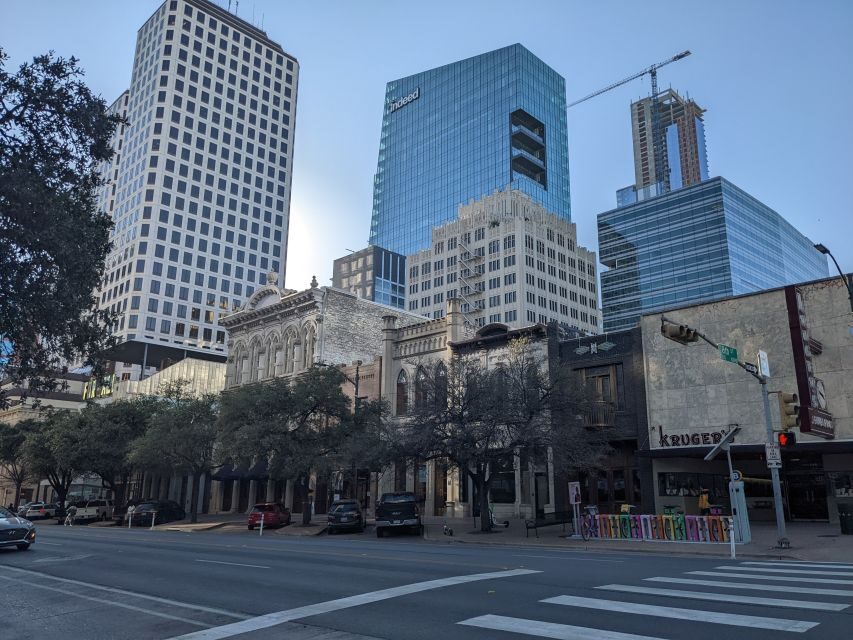
- Driskill Hotel inside visit: Romanesque halls, real stories behind the grandeur
- Austin’s music origin thread: how the city became the Live Music Capital
- Keep Austin Weird explained: why the phrase fits more than a slogan
- Old vice district to 1913 change: the “before” story that shapes the downtown vibe
- Antone’s Nightclub stop: a music landmark you’ll actually walk through
- Local-name storytelling: guides tie neighborhoods to people, not just dates
Start at Halcyon Coffee, then walk into Austin’s layers
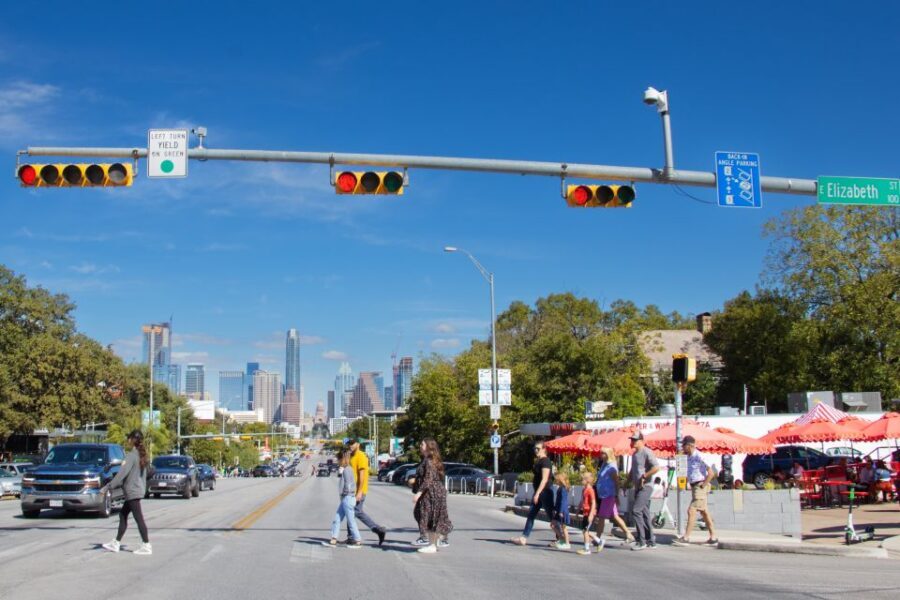
The tour kicks off outside Halcyon Coffee on 4th Street at the corner of Lavaca St. I like starting here because it’s a real downtown anchor you can find easily, and it sets the tone: this isn’t a bus tour where you watch the city go by. You’re on foot, so each block feels like a clue.
From the first stretch, your guide frames Austin as a place that keeps changing its outfit. The story starts with an era that was rowdier by modern standards, then it moves forward to the big shift around 1913, when parts of downtown reinvented themselves. That early context matters. Once you understand that Austin’s downtown has been rebuilt and rebranded before, the later stories about culture and music make more sense.
You’ll also get a practical reminder early on: bring water and comfortable shoes. The walk is short on paper (about 1.1 miles), but you’ll still be standing and listening through multiple stops.
Other downtown walking tours in Austin



Warehouse District and the “before” story that shaped downtown
The route heads into the Warehouse District, where the guide sets you up with what downtown was doing long before the modern skyline became the main character. This part of the tour is less about one building and more about a pattern: Austin’s willingness to change, and the way past business and nightlife rhythms shaped where people gathered.
This is also where the pacing starts to click. There’s enough walking to keep you oriented, but you’re not rushing from one photo stop to the next. If you’re the type who gets restless on tours that sprint, you’ll probably appreciate the steady rhythm.
A small consideration: since there are limited places to sit, you’ll want to treat this like a “comfortable stroll with story time,” not a sit-down lecture.
Antone’s Nightclub: walking history with a music pulse
Next is a visit at Antone’s Nightclub. Even if you already know the name, you’ll get more value by hearing how it fits into the wider music story—how Austin became the city that people travel for because live music is the point, not the bonus.
What makes this stop work is that your guide doesn’t treat music as a random talent factory. The talk links music culture to the city’s identity: people showing up, venues forming around scenes, and the way downtown became the stage where Austin’s personality grew legs.
It’s also one of the clearest examples of why this tour avoids the “checklist sightseeing” trap. A sign and a photo don’t tell you why a place mattered. A guide who can connect music to neighborhoods gives you something you can carry with you after the walk.
Sixth Street Historic District: where the stories meet the street
After that, the tour moves through the Downtown Austin area and then into the Sixth Street Historic District. This section is short, but that’s part of the strategy. Your guide uses it to reinforce the earlier theme: Austin keeps recycling its energy into something new.
Sixth Street can be loud in the real world, so I like that the tour gives you a narrative lens. Instead of seeing it as just bars and crowds, you see it as a chapter in Austin’s longer downtown story.
If you’re sensitive to standing in crowds, you may want to factor in that some sidewalks are just… sidewalks with people on them. That’s not a downside unique to this tour, but it’s the reality of downtown.
The Driskill Hotel interior stop you’ll remember
Here’s the big reason people book this tour: you get to step inside the Driskill Hotel, described as the oldest operating hotel in Austin. This isn’t just a quick look from outside. You spend time inside, and the guide points you toward what makes the building feel distinctive—especially the Romanesque-style halls and the atmosphere of old-school grandeur.
I really like this part because it changes how you read the city. Outside, buildings can blur together. Inside, the details force you to slow down. And when the guide layers in stories about eccentric and visionary figures who shaped Austin, the architecture stops being scenery and becomes a character.
One practical note: hotel interiors can be cooler or more climate-controlled than the street, which can be a relief on a warm day. But plan for standing—there are limited opportunities to sit during the overall tour.
Other walking tours we've reviewed in Austin




Angelina Eberly statue and the Koppel Building: short stops with purpose
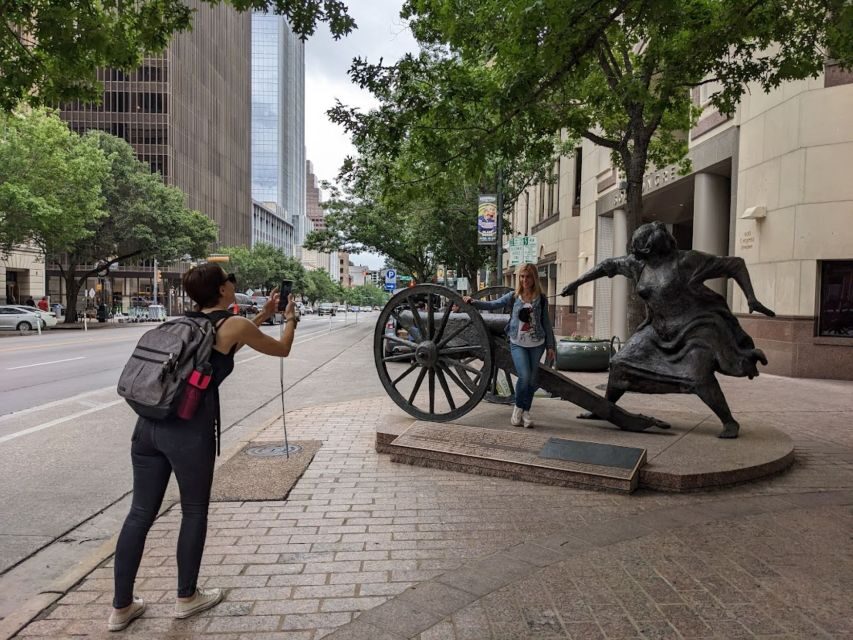
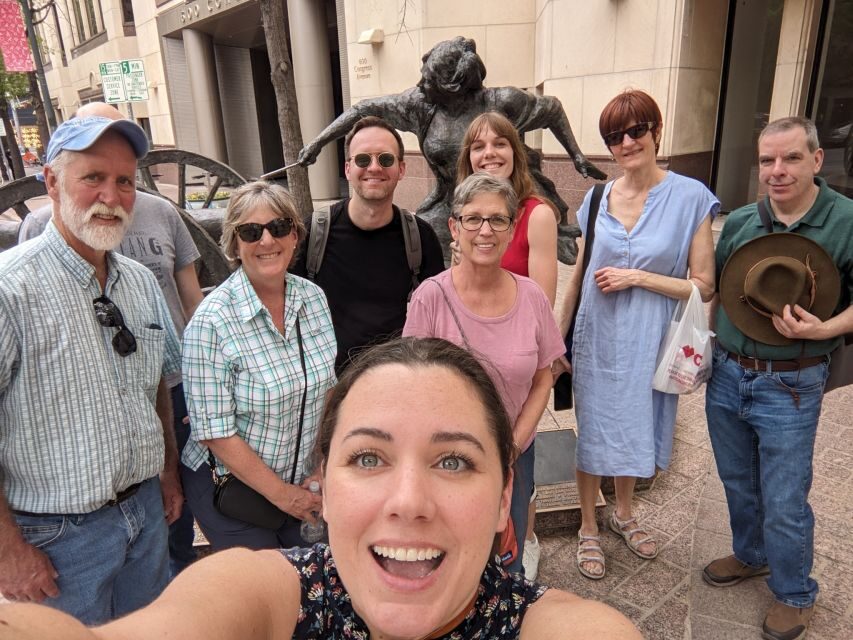
As the walk progresses, you’ll stop at the Angelina Eberly statue and then visit the Koppel Building. These are the kinds of places that often get overlooked when you’re moving fast or hunting for the most famous sights.
What you’ll get here is framing. Your guide uses these stops to reinforce the tour’s central idea: Austin’s identity isn’t just music venues and street names. It’s also shaped by people whose names sometimes live on monuments and buildings more than in ordinary conversation.
Even if you’ve never heard of these landmarks before, the value comes from learning how they connect to the broader story your guide is building as you walk.
From cowboys to condos: how the guide explains Austin’s evolution
One of the tour’s strengths is how it keeps “then and now” in the same sentence. The tour description lays out the arc as a journey from older Austin—cowboy-era and rowdier pasts—to the modern downtown you recognize today.
This matters because it gives you a way to make sense of what you see outside your hotel. You’ll likely leave with better intuition for why certain neighborhoods feel the way they do and why Austin’s culture keeps rewriting itself instead of fossilizing.
That’s also where the Live Music Capital thread lands. Your guide doesn’t treat music as a standalone story. It’s woven into the city’s broader tendencies: gathering, performing, improvising, and protecting a little weirdness from the outside world.
Keep Austin Weird: a phrase you can finally explain
A key theme on this tour is why Austin proudly says Keep Austin Weird. The guide treats it as more than a marketing slogan, tying it to the artists, free spirits, and local legends who have shaped the city’s character.
I like when a tour earns a phrase like this. Many tours toss it out like a sticker. Here, you get the backstory—how that weirdness became part of the city’s self-image, and why it keeps showing up in new forms.
If you’re hoping to understand Austin beyond breweries and headlines, this theme is the “aha” moment that helps everything else click.
How long is it, and what should you wear?
The tour is 2 hours and covers about 1.1 miles. That combo is ideal for a first or second day when you want context without burning your whole afternoon.
Because rest stops are limited, I suggest you plan to move steadily and keep hydration on your mind. Bring water and weather-appropriate clothing. The tour runs rain or shine, so a light layer and a compact rain plan can save your mood.
You’ll also be standing for multiple parts, including inside the Driskill. Comfortable shoes are non-negotiable.
Guides, pacing, and the amplification factor
A big theme in the guide experience is how smoothly they handle talking-heavy history. Multiple guides—like Emily, Caroline, and Kim—are praised for keeping the story engaging and for having good presence.
There’s also an option to request a voice amplifier at every stop if you need one when you arrive. In practice, an effective amplification system matters on a downtown walk where you’re near traffic and foot traffic. You want to hear the story clearly so you don’t have to guess.
Also, the talk tends to be interactive. You’re not trapped in silence while the guide lectures. If you like asking questions, this tour seems built for that.
Price: why $29 can feel like a bargain
The price is $29 per person for a 2-hour guided walk. That’s not just “cheap history.” You’re paying for three things that are hard to replicate on your own:
- A guided narrative that connects downtown buildings to the city’s identity
- A real interior visit to the Driskill Hotel, which most self-guided walks skip
- Local perspective, including practical recommendations that can help you plan the rest of your day
If you’re only in Austin for a short time, this cost can pay back fast because it helps you make better choices after the tour—where to eat, what areas to focus on, and what to notice when you’re walking around anyway.
Who this tour is best for (and who should skip)
This experience is a good fit if you:
- Want an easy entry point into Austin’s history without getting lost
- Like architecture plus storytelling, not just street names
- Care about how Austin’s music culture connects to the city’s overall character
- Are comfortable walking for about two hours
It’s not the best match if you’re traveling with kids under 13, since the tour is recommended for ages 13+ due to mature historical themes. It’s also marked as not suitable for people with mobility impairments, even though the activity is described as wheelchair accessible—so if mobility is a concern, it’s worth checking directly with the operator before you buy tickets.
Should you book it?
I’d book this tour if you want a short, focused way to understand why Austin is Austin—especially if you haven’t wrapped your head around the city’s music identity yet. The Driskill interior stop alone is a strong value driver, and the story thread around Keep Austin Weird is the kind of context that makes your later sightseeing better.
Skip it only if you know you can’t handle two hours of mostly standing and walking, or if mature themes might be a problem for your group.
If you’re on the fence, think like this: $29 buys you a guided path, a landmark interior, and a set of stories that make downtown feel readable. For first-time Austin visits, that’s a fair trade.
FAQ
Where do I meet the guide?
Meet your guide outside Halcyon Coffee on 4th Street at the corner of Lavaca St.
How long is the tour?
The tour lasts 2 hours.
How far do we walk?
The total walk is about 1.1 miles.
Does the tour run in bad weather?
Yes. The tour happens rain or shine.
Is the tour suitable for children?
It’s recommended for ages 13+ due to mature historical themes, and it’s not suitable for children under 13.
Is the tour wheelchair accessible?
The activity is listed as wheelchair accessible, but the experience is also marked not suitable for people with mobility impairments—so it’s smart to check your specific needs before booking.
Can I bring a camera or record video?
Video recording isn’t allowed. Restrooms are available at the starting point and near the end of the tour.
Can the guide use a voice amplifier?
If you need the guide to use a voice amplifier at every stop, you can let them know upon arrival.