REVIEW · AUSTIN
Downtown Austin Historical Architecture Walk
Book on Viator →Operated by Nitty Gritty City Tours of Austin · Bookable on Viator
Austin’s downtown reads like a style book. This walk threads through Capital Square government buildings (1856–1933), Victorian-era homes, and major civic and entertainment sites, all tied together with clear architectural storytelling. I like that it’s timed just right for a first pass at central Austin, and you’ll finish with a better sense of how the city looked and why it changed.
I love two things most. First, you get inside the Driskill (with admission handled), so the tour isn’t just eyeballing façades from the sidewalk. Second, the guide—on my outing it was Emily—keeps the pace friendly and answers questions with specific details, including local suggestions that go beyond the route.
The main consideration is simple: you’ll spend a lot of time outdoors, and moderate fitness helps. The experience also depends on good weather, so plan for a sunny morning or be ready to reschedule if conditions are poor.
In This Review
- Key highlights you’ll care about
- Starting at 103 E 5th St: a downtown architecture route that makes sense
- Capital Square to the Driskill: Austin’s civic core sets the tone
- Stop 1: Driskill Hotel interior and its layered architectural story
- Stop 2: Bremond Block Victorian homes and the evolution you can walk
- Stop 3: Heman Marion Sweatt Travis County Courthouse outside Art Deco
- Stop 4: Texas Governor’s Mansion and the surprise of what used to be there
- Stop 5: Texas State Capitol on the south lawn—learning to read it from outside
- Stop 6: Saint Mary Cathedral—history and unique construction from the sidewalk
- Stop 7: Capitol Complex Visitors Center—the oldest and strangest note in the margin
- Stop 8: Paramount Theatre ornamentation from across the street
- Price and value: is $56 fair for 1h45 with a free interior?
- Who this architecture walk fits best
- Should you book this Downtown Austin Historical Architecture Walk?
- FAQ
- Where does the Downtown Austin Historical Architecture Walk start?
- What time does the tour begin?
- How long is the tour?
- How much does it cost?
- Is the tour guided?
- Is there an attraction admission fee on the stops?
- Is this tour in a small group?
- Is it friendly for people using public transportation?
- What fitness level do I need?
- Is cancellation available if weather is bad?
Key highlights you’ll care about
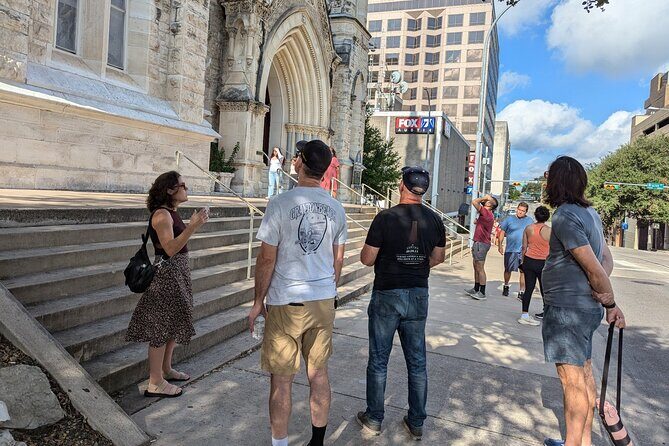
- Driskill Hotel interior time so you see more than exterior styling
- Bremond Block for a well-preserved pocket of Victorian homes and their evolution
- Travis County Courthouse viewed from outside, with attention to Art Deco details
- Texas Capitol and Capitol Complex stops focused on architecture you can read from the south lawn and nearby grounds
- Saint Mary Cathedral and Paramount Theatre for distinct construction and period ornamentation
- Small group size (max 25) that makes question-asking realistic
Starting at 103 E 5th St: a downtown architecture route that makes sense
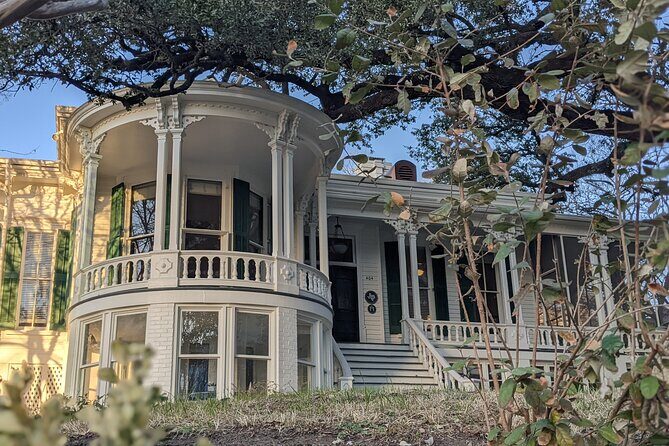
The walk begins at 103 E 5th St., Austin, TX 78701, right in the middle of things—easy to orient yourself before you start. You’re set up for a compact route that moves from government structures to residential blocks and finally into the commercial heart of downtown.
I like how the tour’s arc mirrors Austin’s own growth. You start near the historic area where key government buildings span 1856 to 1933, then shift into the more intimate scale of Victorian neighborhoods, and end with larger civic and public entertainment landmarks. That structure matters because it helps your brain separate eras instead of mixing everything into one blur.
Also, this is an English guided experience with a mobile ticket, so you’re not juggling paper in a crowded sidewalk situation. And because the tour ends back at the starting area, you don’t have to plan a complicated “what now?” moment at the end.
Other downtown walking tours in Austin



Capital Square to the Driskill: Austin’s civic core sets the tone
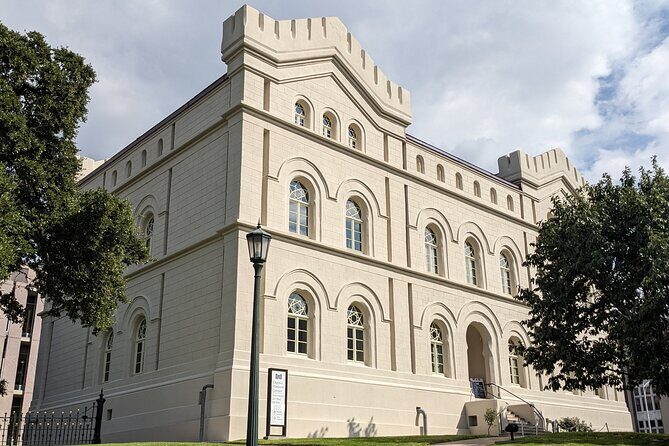
The meeting point puts you close to where downtown government buildings shaped the look of the city. The tour begins near Capital Square, where major government construction runs from 1856 through 1933, and that span becomes your anchor for the whole experience.
As you walk, your guide’s job is to help you connect architecture to time—what changed, what stayed, and how the city’s priorities showed up in building design. You’ll get a practical takeaway: it’s much easier to spot stylistic differences when you know what era you’re standing in.
Stop 1: Driskill Hotel interior and its layered architectural story
This is the only stop where you go inside, and it’s the one I’d circle if you’re choosing between “see the outside” and “understand the building.” At the Driskill, you’ll spend about 20 minutes, and your admission is handled as part of the experience.
What makes this stop special is the way the guide frames the hotel as an evolving architectural object—how it was inspired and how its design carries meaning across time. You’ll also get a feeling for why this kind of grand downtown hotel belongs in the same conversation as civic buildings: they both project stability, status, and identity.
A practical note: because the group moves on quickly, you’ll want to take in details without overthinking. I like the inside stop because it gives you context for what you’ll see outside later—especially when you start comparing materials, scale, and ornamentation across Austin’s different eras.
Stop 2: Bremond Block Victorian homes and the evolution you can walk
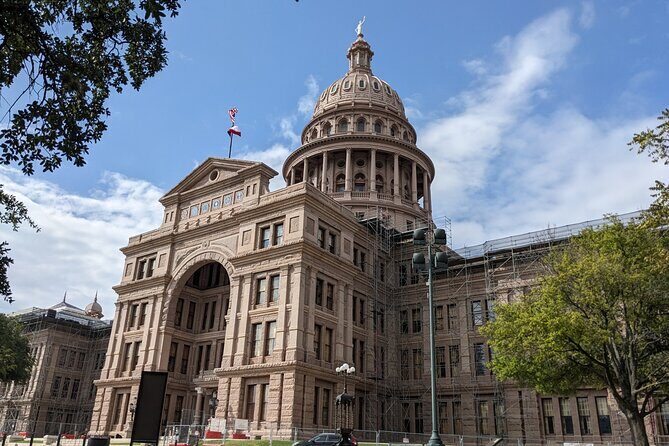
Next comes the Bremond Block, where you get a 20-minute stroll around a well-preserved pocket of Victorian homes. This is a calmer stop than some of the courthouse and capitol moments, and that’s a good thing—your eyes get a break while your brain stays engaged.
This block is all about how the architecture changes and what the homes communicate about their period. The guide focuses on architectural evolution, and one of the strongest payoffs here is seeing how the Victorian-era look remains legible even when you’re only walking the perimeter.
In my experience of this stop, the best strategy is to pause at a few buildings rather than trying to photograph everything. Look for how rooflines, façade rhythm, and decorative elements create a “designed” street feel. That way, the stop becomes more than background scenery.
Stop 3: Heman Marion Sweatt Travis County Courthouse outside Art Deco
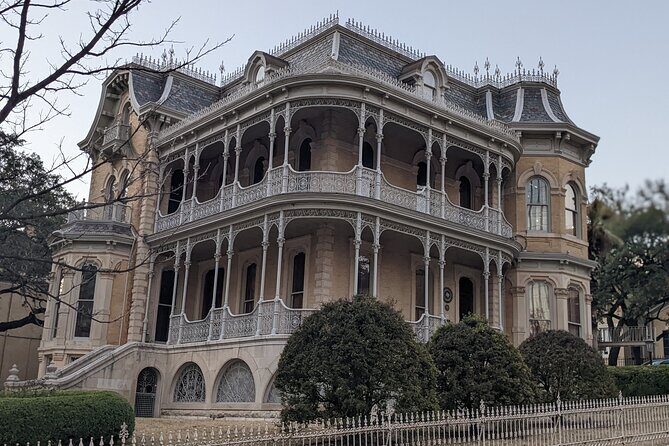
You then shift to the Heman Marion Sweatt Travis County Courthouse, viewed from outside for about 10 minutes. The emphasis here is on it as a monument of predepression Art Deco, which is a useful phrase because it points you to why this building matters visually: it comes from a moment before the era tightened up.
Ten minutes sounds short, but with a good guide it’s enough to learn what to look for. I’d treat this as a “scan and decode” stop. Stand where your guide tells you to stand, notice the geometry and styling cues, and let the explanation connect those cues to the broader period.
If you’re an architecture fan, this is the stop that helps you go from “I recognize Art Deco” to “I understand what the building is saying.”
Other walking tours we've reviewed in Austin






Stop 4: Texas Governor’s Mansion and the surprise of what used to be there
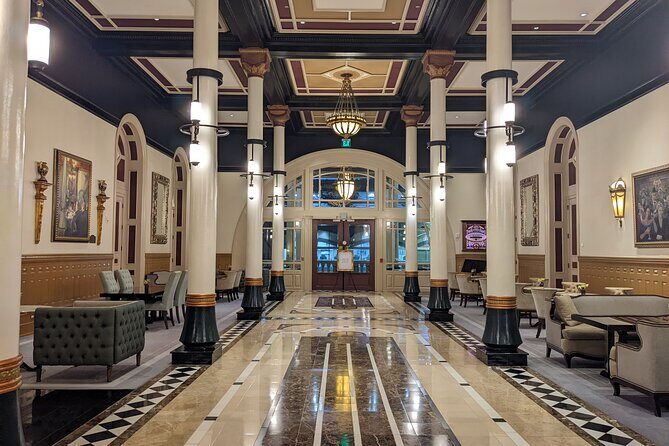
The route continues to the Texas Governor’s Mansion for another 10 minutes. The mansion can look a little out of place compared to the surrounding mix of government and commercial buildings, and the guide uses that contrast to tell a key story.
The point: 100 years ago, these blocks were covered in houses, and some were even larger than the Governor’s Mansion. That kind of detail changes your perspective fast. Instead of thinking of the mansion as a lone standout, you start seeing it as a remnant of an older streetscape.
This stop is also a reminder that downtown architecture isn’t just about what remains—it’s about what was replaced. If you want Austin’s skyline to feel less random, this is the kind of interpretation you’ll be glad you heard.
Stop 5: Texas State Capitol on the south lawn—learning to read it from outside
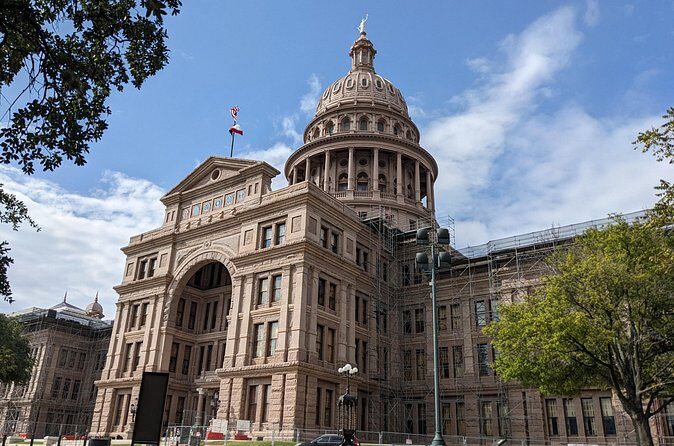
The Texas State Capitol is next, with about 10 minutes spent outside on the south lawn. The tour’s pitch is straightforward: it’s the largest State Capital building in the country, and its architecture carries a lot of story.
Since you’re viewing it from outside, your guide’s job matters even more. Instead of wandering, you’ll get cues for what to notice—how elements relate to each other, what design choices signal about the institution, and how the building’s scale affects your sense of place downtown.
Here’s a practical tip for this part: give yourself permission to slow down for a single area. Pick one façade element or one major feature and really look. Even with limited time, that approach helps the building “stick” in your memory.
Stop 6: Saint Mary Cathedral—history and unique construction from the sidewalk
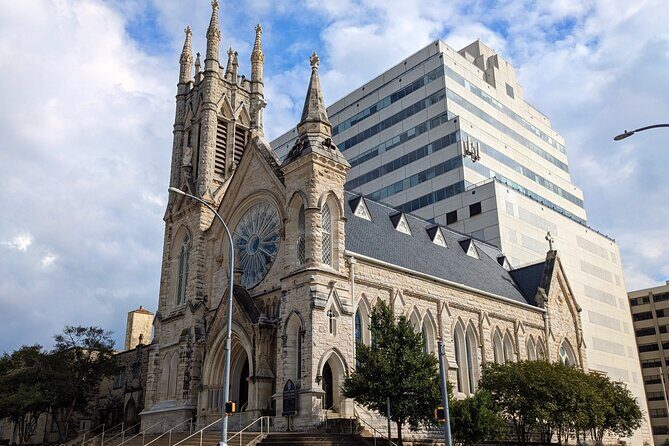
At Saint Mary Cathedral, you’ll also have about 10 minutes, and it’s a from-the-outside stop. The guide focuses on the cathedral’s history and its unique construction, which is exactly the kind of explanation that makes a church building more than a photo backdrop.
I like this stop because it adds a different architectural rhythm to the route. After capitol and civic structures, a cathedral read on its own terms feels like a palate cleanser. Even without stepping inside, you can often spot key construction choices if you know what to look for.
If you’re prone to walking past religious buildings too fast, slow down here. This stop is designed for the people who want meaning, not just landmarks.
Stop 7: Capitol Complex Visitors Center—the oldest and strangest note in the margin
The next stop is the Capitol Complex Visitors Center, also about 10 minutes. It doesn’t fit as neatly with its neighbors, and the guide leans into that. The explanation includes the idea that it’s the oldest and possibly strangest state building still standing in Austin.
That framing is useful because it tells you to approach the building with curiosity rather than expectation. If you walk in looking for a perfect match to the surrounding style, you’ll miss the point. The guide wants you to notice how the structure’s character creates its own identity in the Capitol complex.
This stop also helps you understand something broader: architectural “belonging” is a human judgment. Buildings don’t just represent styles; they represent how designers and the city decided to use space at different moments.
Stop 8: Paramount Theatre ornamentation from across the street
The final stop is Paramount Theatre, with about 5 minutes for a view across the street of the theatrical ornamentation used in its 1915 construction. Short stop, big payoff—because the goal is to show you a specific kind of visual language: the style that says this was built for spectacle.
This is the kind of ending that leaves you with a last strong image. After courthouses and government buildings, the theatre’s decorative approach makes sense as part of Austin’s civic life too. The city didn’t only build power; it also built entertainment.
For this stop, you’ll get the best results if you take a step back and frame your view. Let the details come to you. Trying to cram everything into one close photo usually makes ornamentation look chaotic instead of meaningful.
Price and value: is $56 fair for 1h45 with a free interior?
At $56 for roughly 1 hour 45 minutes, I’d call the value solid, especially because the tour is guided and includes time inside the Driskill with admission handled. Many city architecture walks either skim exterior views or bundle in extra fees that surprise you later. Here, the structure is straightforward: you pay for interpretation, not a ticket puzzle.
You also get several “free admission ticket” entries tied to the key stops. That matters because it keeps the experience from turning into a cost-and-line-checking exercise. For a short downtown route, that kind of clarity keeps the focus on learning, not logistics.
The small group limit of 25 is another value factor. In a large group, architecture talk turns into loud walking. In a smaller group, you can actually hear the explanation and ask a follow-up—exactly the kind of interaction that makes the route feel personal.
Who this architecture walk fits best
This tour is a great match if you want an efficient way to get your bearings in downtown Austin and you like architecture explanations that point out what to look for. It’s especially good for first-timers who don’t want to spend the day researching by themselves.
It also suits people who enjoy a mix of building types—hotels, Victorian neighborhoods, courthouses, capitol grounds, a cathedral, and a theatre. If you only care about one style, this might feel like a lot of variety. But if you like seeing how a city’s design changes with its needs, you’ll find it satisfying.
Because it’s outdoors and timed, it’s best for those with moderate physical fitness. You’ll do a good chunk of walking even though each stop is brief.
Should you book this Downtown Austin Historical Architecture Walk?
I’d book it if you want a guided route that makes Austin’s central architecture feel readable. The Driskill interior stop is the big draw for me, and the route balances government, residential, and entertainment so you don’t end up with a one-note day.
If you’re the kind of person who loves asking questions and wants an English guide to help connect details to the bigger story, you’ll likely enjoy this pace. The presence of a guide like Emily—who’s shown up with strong answering and extra local suggestions—makes the experience feel more than a checklist.
Go for it if you’re visiting Austin with a morning mindset and good weather on the calendar. Pass or reschedule if you’re hoping for a mostly indoor experience or you’re sensitive to standing outdoors for short, repeated stretches.
FAQ
Where does the Downtown Austin Historical Architecture Walk start?
The tour starts at 103 E 5th St., Austin, TX 78701, USA.
What time does the tour begin?
The start time listed is 9:45 am.
How long is the tour?
The duration is approximately 1 hour 45 minutes.
How much does it cost?
The price is $56.
Is the tour guided?
Yes. The experience includes an English tour guide.
Is there an attraction admission fee on the stops?
The stops list admission ticket free, and the Driskill is the one you go inside. The tour includes the Driskill admission ticket for the interior visit.
Is this tour in a small group?
Yes. The experience has a maximum of 25 travelers.
Is it friendly for people using public transportation?
It is noted as near public transportation.
What fitness level do I need?
Travelers should have a moderate physical fitness level.
Is cancellation available if weather is bad?
Yes. The experience requires good weather, and if it’s canceled due to poor weather you’ll be offered a different date or a full refund. Free cancellation is also available up to 24 hours in advance for a full refund.