REVIEW · AUSTIN
Gunfights & Grifters: A Historical Walk on the Wild Side
Book on Viator →Operated by Nitty Gritty City Tours of Austin · Bookable on Viator
Austin has a darker downtown than you expect. This history walk on the wild side takes you past the Texas State Capitol, the Driskill, and Austin’s old red-light zone, with a guide who stitches the scandals together into one moving story. I really like how you cover a lot of ground in a short time on foot, and I like that the tour leans into the messy stuff: politics, vice, and street-level crime. One thing to plan for: the tour does not include drinking water, so bring some if it’s warm.
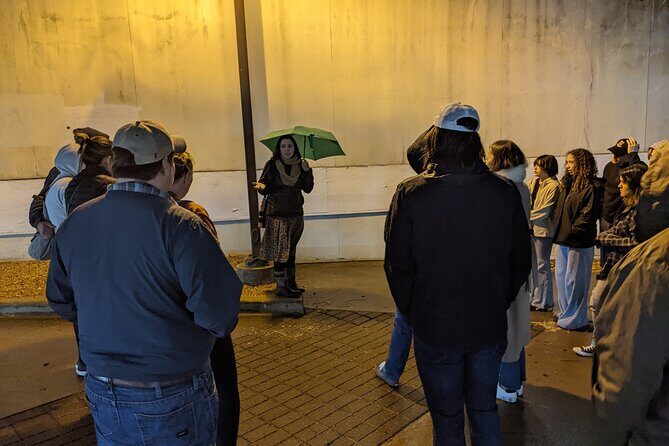
If you get Emily as your guide, you’re in good hands. Her storytelling is built on historic events and she’s clearly done serious research, with a style that makes you look at familiar buildings like they’re evidence. The meeting spot is easy to find, and the group stays small (up to 20), so it feels more like a focused stroll than a cattle-call history lecture.
The pace is friendly but not slow. You’ll do about 1 hour 30 minutes to 2 hours of walking with a moderate fitness level requirement, and it runs best in good weather (they’ll offer a different date or a refund if weather cancels it). Wear comfortable shoes, and you’ll be set.
In This Review
- Key things to know before you go
- Gunfights and Grifters: Austin’s downtown, told sideways
- Price and what $48 buys you in real terms
- Meeting at 100 1/2 W 11th St and ending by Halcyon Coffeehouse
- Stop 1: Texas State Capitol and the bribery scandal story
- Stop 2: Texas Governor’s Mansion and a piggy-bank marriage of power
- Stop 3: Littlefield Building and Austin’s vigilante gunfighter legend
- Stop 4: The Driskill Hotel and scandal you can walk into
- Stop 5: Midnight Cowboy Modeling and the mystery of an unmarked door
- Stop 6: O. Henry House Museum and the moral stories behind the man
- Stop 7: 327 Congress Ave. and the serial killer scandal web
- Stop 8: Halcyon and Austin’s 1871–1913 red-light district
- Who should book this walk (and who might want a lighter option)
- Should you book Gunfights & Grifters? My quick decision guide
- FAQ
- How long is the Gunfights & Grifters walking tour?
- What does it cost?
- Where do I meet, and where does the tour end?
- Do I need to buy admission tickets for the stops?
- Is there a mobile ticket?
- What’s included in the price?
- What is not included?
- Is the tour suitable if I have moderate mobility or fitness needs?
- What happens if weather is bad?
- Is there a cancellation refund if I change plans?
Key things to know before you go

- A scandal-forward route through Austin’s politics, saloons, crime, and red-light past
- Eight historic stops in about 1.5 to 2 hours, with the guide keeping you moving
- Emily’s storytelling style brings lesser-known details into focus
- On-foot navigation means you don’t have to figure out the order of stops yourself
- Small group size (max 20) keeps the experience personal
- No drinking water included, so plan to hydrate on your own
Gunfights and Grifters: Austin’s downtown, told sideways
This tour is a simple idea: take the Austin you already know and then show you the darker layers underneath. Instead of just praising founders and firsts, you’ll hear the kind of stories that sound too wild to be true—bribery, gambling, gunplay, murder scandals, and the women who ran an entire economy in the city’s early red-light era.
The value isn’t just the subject matter. It’s the format. With a guide leading the way, you get a sequence of stops you can actually follow, and each location connects to what came before. That matters in downtown Austin, where alleys, storefronts, and building facades can look ordinary now—but weren’t back then.
This is also one of those tours where the guide’s preparation shows. In past tours, Emily’s research-and-story approach has been called out for feeling thoughtful, not improvised. If you like history that explains how people really behaved, you’ll probably enjoy the tone.
Other ghost and haunted tours in Austin


Price and what $48 buys you in real terms
At $48, you’re paying for a guided walk with structured stops, not for admission fees. The tour includes all fees and taxes, and admission at each stop is listed as free. That’s a big part of the value.
You’re also getting a time-efficient experience. In roughly 1.5 to 2 hours, you hit major landmarks and several lesser-known points tied to the city’s scandals—without you needing to research each location yourself. With a max group size of 20, the guide can keep the pacing and attention on the story.
The one extra cost I’d plan for is basic comfort. Drinking water isn’t included, so if you’re prone to getting thirsty, add your own bottle to your daypack.
Meeting at 100 1/2 W 11th St and ending by Halcyon Coffeehouse
The walk starts at 100 1/2 W 11th St, Austin, TX 78701, with a start time of 10:00 am. You’ll end at the corner of 4th and Lavaca, outside Halcyon Coffeehouse & Bar.
That finish location is handy because you’re near a place you can naturally pivot into the rest of your day—coffee, a snack, or a regroup moment after the storytelling. It also means you’re not forced into an awkward backtrack through downtown streets at the end.
Since the route is on foot and the meeting point is a specific address, I’d treat the first 10 minutes like a mini ritual: show up a few minutes early so you’re not stuck trying to find the group while you’re mentally bracing for the first grim story.
Stop 1: Texas State Capitol and the bribery scandal story
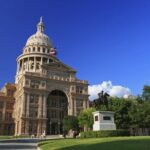
Your first stop sets the tone: the Texas State Capitol and a political bribery scandal so explosive it produced an election people still remember as The year they threw the rascals out. The appeal here is that it frames crime and corruption as something organized—lawmakers, elections, and public power.
When you start at the Capitol, you also get context for everything that follows. Later stops aren’t random. They tie back to how money and influence moved through the city, from official offices to the shadow economy on the streets.
Practical note: this stop is listed at about 15 minutes, and admission is free. You’re mostly absorbing story, not museum-style browsing, so you’ll want to keep your phone charged for pictures and then focus on listening while you’re there.
Stop 2: Texas Governor’s Mansion and a piggy-bank marriage of power
Next you’re outside the Texas Governor’s Mansion, where the story turns from political bribery to personal control. The tour focuses on a husband/wife duo who allegedly used the Governors office like their own piggy bank—helping themselves to millions.
This stop works well because it highlights a different angle of corruption. It’s not only about officials voting for the right thing or wrong thing. It’s about how authority can be turned into private profit, right in the building meant to represent the public.
At around 15 minutes, you’ll likely get the key narrative beats and the why-it-mattered context, then move on. That pace is good if you don’t want your first hour to feel like you’re waiting for the tour to start slowing down.
Other downtown walking tours in Austin
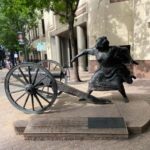

Stop 3: Littlefield Building and Austin’s vigilante gunfighter legend
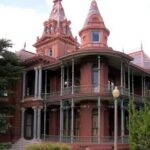
The Littlefield Building stop is short—about 10 minutes—but it’s designed to spark your curiosity. Here, you’ll hear about Austins own gunfighting, gambling wild west vigilante outlaw, described as a myth and legend even during his own lifetime.
This is one of those moments where you get to see the blurred line between legend and record. Even without a deep museum exhibit, the guide can point out what people believed then, and why that belief spread. If you’re the type who likes to think about how stories are made, this stop can feel like mental archaeology.
Because the stop is brief, don’t expect a long background lecture. Instead, treat it as a hook—an appetizer that makes the next darker places feel connected, not like random stops along a route.
Stop 4: The Driskill Hotel and scandal you can walk into
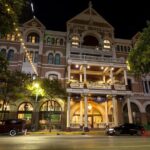
At The Driskill, the tour goes longer—about 20 minutes—and it’s the kind of stop that can feel like a movie set even when you’re standing in plain daylight. The focus is that the Driskill Hotel history could be written largely in terms of scandal: quack doctors, murderous sex workers, assassination attempts, lobby gunfights, and early desegregation.
This is a high-impact stop because it mixes categories: medicine, violence, politics, and social change. You don’t just hear about crime—you also hear about how institutions responded to it, and how other people tried to shape public life around it.
It’s also one of the only places on the route where the tour explicitly mentions going inside. That’s great for context because the setting matters: the same walls that hosted power plays and conflicts can make the stories feel more immediate.
Stop 5: Midnight Cowboy Modeling and the mystery of an unmarked door
Then you hit 6th St for a curiosity stop: a door tied to the name Midnight Cowboy Modeling. The tour makes a point of that it’s unmarked, and the historical significance is tied to what you might expect from that kind of coded branding.
This stop is only about 5 minutes, and that’s exactly why it works. It gives you a quick gut-check moment: Austin’s past isn’t always labeled neatly on plaques. Sometimes it hides in plain sight, behind business names that sound harmless or even playful while pointing to something much more complicated.
If you tend to skim details, this is the moment to slow down slightly. The guide can help you read the cues in the street-level setting—what’s public, what’s not, and why the city would have wanted it that way.
Stop 6: O. Henry House Museum and the moral stories behind the man
The O. Henry House Museum stop lasts around 10 minutes and flips the tone. O. Henry is famous for wholesome moralistic short stories, but the tour points out that after his death, people began uncovering the truth about the 10 years he spent in Austin before he became world famous.
This stop adds balance to the darker topics. It doesn’t erase the violence and corruption elsewhere, but it reminds you that Austin also produced artists and writers who packaged their experiences into fiction. You’re basically asking: what happened during those years that later got turned into moral lessons?
Because it’s a museum stop tied to a person, it’s also easier to mentally file than the more sprawling political and criminal stories. If your brain gets saturated by scandal, this can feel like a reset.
Stop 7: 327 Congress Ave. and the serial killer scandal web
At 327 Congress Ave. suite 100, the tour tells a grim story: in 1885, Austin had a serial killer, and the murders set off an explosion of scandals involving politicians, police, madams, and dangerous racial prejudice.
This is the stop where the tour’s darker theme becomes emotionally heavy. It’s also where you’ll likely feel how corruption interacts with fear. When people are scared, power can act fast and messy. When prejudice is involved, the harm can become systemic.
The time here is about 10 minutes, and admission is free. You’re not meant to learn everything. You’re meant to understand the shape of the event and how it braided into social and political life afterward.
If you’re sensitive to crime-related topics, keep this stop in mind so you can pace yourself for it. Earbuds and phone doomscrolling won’t help—this is a listen-and-think stop.
Stop 8: Halcyon and Austin’s 1871–1913 red-light district
The final stop is at Halcyon Coffeehouse & Bar, and it brings the story full circle: Austin’s red light district, active from 1871 to 1913. You’ll visit what was once known as Madam’s Row and hear about the three wealthiest and most notorious women of Austins golden age.
This is one of the tour’s most memorable ideas because the city’s geography becomes the evidence. You’re standing in a place people use today—coffee and conversation—while the guide explains how a different kind of nightlife economy once ran through these same corridors.
It’s also where you can think about power in a new way. The women in this story weren’t only victims; they were entrepreneurs within a stigmatized industry, and their wealth created influence. The tour’s framing can make you reconsider what people meant by respectability versus control.
At about 15 minutes, you end with a specific, clear window into the city’s past economy. Then you step out at 4th and Lavaca with a very different mental map of downtown.
Who should book this walk (and who might want a lighter option)
This tour is best for you if you like history that’s story-driven and morally complicated, and if you enjoy learning how money, politics, and crime overlap in real places. If you’re a fan of Austin that digs past the music scene and the casual postcard scenes, this fits well.
It’s also a strong choice if you love good guide work. The reviews centered on Emily’s storytelling and the sense that she used books, historical newspapers, and archives to build the tour, not just vibes.
If you want a calm, museum-like experience with minimal crime content, you may find the subject matter too dark. And if hydration is a big deal for you, plan to bring water because it’s not included.
Should you book Gunfights & Grifters? My quick decision guide
Book it if you want a time-efficient downtown history walk that’s willing to talk about the scandal side of Austin—politics, vice, crime, and the people who navigated it. At $48 with free admissions at the stops, it’s a good value for a guided route that keeps you moving and gives you context you wouldn’t guess just by looking at the buildings.
Skip it if your history preferences lean strictly to friendly, uplifting topics. Also skip if you know you struggle with walking for 1.5–2 hours; the tour only lists moderate physical fitness, so it’s doable for many people, but it is still a walk.
If you go, do one simple thing: bring comfortable shoes and your own water. Then settle in and let the city teach you the part it doesn’t put on brochures.
FAQ
How long is the Gunfights & Grifters walking tour?
The tour runs about 1 hour 30 minutes to 2 hours.
What does it cost?
The price is $48.
Where do I meet, and where does the tour end?
You start at 100 1/2 W 11th St, Austin, TX 78701. You end at the corner of 4th and Lavaca, outside Halcyon Coffeehouse & Bar.
Do I need to buy admission tickets for the stops?
No. The tour lists admission tickets as free for the stops.
Is there a mobile ticket?
Yes. The tour uses a mobile ticket.
What’s included in the price?
It includes all fees and taxes and a knowledgeable guide.
What is not included?
Drinking water is not included.
Is the tour suitable if I have moderate mobility or fitness needs?
It’s designed for travelers with a moderate physical fitness level.
What happens if weather is bad?
This experience requires good weather. If it’s canceled due to poor weather, you’ll be offered a different date or a full refund.
Is there a cancellation refund if I change plans?
Yes. You can cancel up to 24 hours in advance for a full refund, and cancellations are free up to that point.